

120 BAHADUR – An iconic last stand vividly recounted
Film Review
Bravery is not too challenging for a body of soldiers when they are winning a battle. It is when you are losing one and fighting with your back to the wall that the true bravery of soldiers is tested. That too, rare comes the instances when collective bravery comes to the fore, when an entire unit chooses to fight to the last man and last round. In the lexicon of Indian military history, no battle equals in the collective bravery displayed by the 120 Ahirs of the 13th Battalion the Kumaon Regiment in the snowy pass of Rezang La in Ladakh during the Sino-Indian War of 1962, except the Battle of Saragarhi in a different era, when 21 Sikhs scripted a legend.
On 18 November 1962, the Indian Army picket at the strategic mountain pass of Rezang La, at a height of 16,000 feet, was held by Charlie Company of 13 Kumaon, commanded by Major Shaitan Singh, comprising 120 soldiers, entirely belonging to the pastoral community of Ahirs from the Ahirwal region falling in the plains of Haryana and Rajasthan in Northen India. That day, an overwhelming Chinese force of over 3000 soldiers of the People’s Liberation Army (PLA), with supporting artillery, mounted an attack on the picket in what they called the Battle of No. 8 & No. 9 Indian Posts in Ngari. While the Chinese tried to overrun the post employing human wave tactics with their numerical superiority, the Kumaonese, despite under orders to fall back if their position became untenable and no artillery to support them, steadfastly held on to their position, inflicting heavy casualties on the attackers. In the proverbial to-the-last-man-and-last-round battle they fought, numbers prevailed ultimately and the Kumaonese, to a man, perished, including their gallant commander, leaving a lone survivor to tell the story.
Although the Chinese succeeded in capturing the pass, the enormous scale of casualties they had suffered, estimated to be 1400 dead and many more wounded, deterred them from advancing any further and pursuing their objective of capturing the strategic Indian airfield at Chushul. Had they not been so stopped on their tracks at Rezang La, there was always a possibility of Chushul falling to them. The sacrifice of the 120 valiant Kumaonese was thus, not in vain. Their mortal remains, buried under snow and frozen, could only be recovered after winter for funeral rites. Major Shaitan Singh was posthumously awarded Param Vir Chakra, the nation’s highest gallantry award and many of his soldiers were also suitably decorated.
The Battle of Rezang La, the greatest of Indian feats of arms, ranks among history’s topmost last stands, alongside the likes of the Battle of Thermopylae, Siege of the Alamo and Battle of Camerone. First off, the makers of the movie deserve the nation’s gratitude for presenting this iconic battle with the reverence and finesse it merits. It is a realistically crafted work of art, void of the nauseating jingoism and chest thumping that has become hallmarks of the so called ‘war movies’ rolled out of Bollywood. Mercifully, it also avoids unwarranted romantic interludes and songs, which are the other irritants that characterizes Indian war movies.
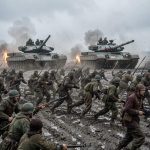
The cast and crew have treated the theme admirably well. The narrative has an endearing flow, innovatively orchestrated as recollection of the lone survivor of the gallant 120 of 13 Kumaon. It follows a well-researched script, with no unnecessary deviations and distractions. The battle scenes are authentic and well depicted, avoiding scenes of mindless bravado and melodrama, the standard fare of Bollywood war movies.
Farhan Akhtar has put up a remarkable performance in the lead role of Major Shaitan Singh. So has Ankit Swach, who has almost as much screen presence as Akhtar, in the role of Sepoy Ramlal, the lone survivor. The other actors cast in the multiple roles of officers and men have also performed with professionalism and maturity. Raashi Khanna, cast as the wife of Major Shaitan Singh, despite her limited screen presence, has fitted very well into the role.
An eminently watchable Indian war movie. Kudos to its producers. May our moviedom be inspired by their effort to honour the countless other fallen heroes of our armed forces similarly.





Eloquently bought out Sir … haven’t seen the movie though 👍
Thank you. Glad you liked it. The movie is worth seeing. It’s on OTT now.